Decentralized Leveraged Exchanges From Zero to One Hundred
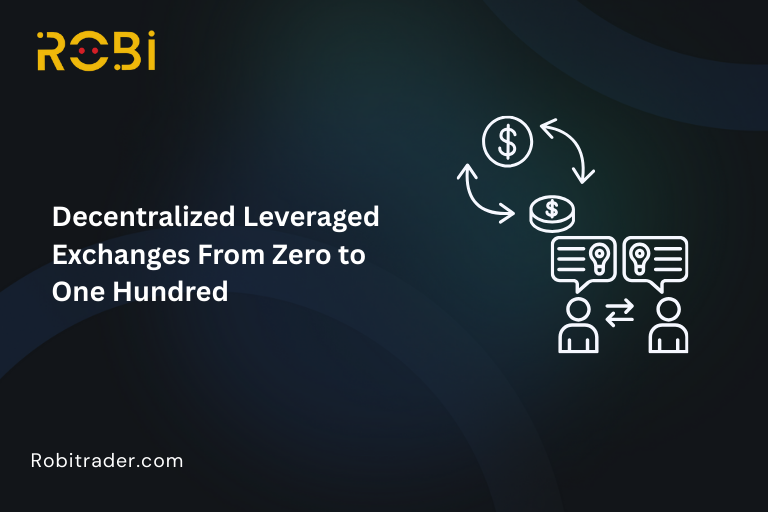
Decentralized leveraged exchanges are trading platforms on the blockchain where users can trade with leverage without a central company. These exchanges use smart contracts, allow full control of user funds, and support tools like long, short, margin, and perpetual trading.
Meaning of Decentralized
Decentralized means the platform does not have a central owner or company. It works on the blockchain. Users do not give their money to a company. They keep their funds inside their own wallet. They connect to the exchange with a wallet and trade safely through smart contracts. This gives more security and control.
Meaning of Leverage
Leverage means traders can trade with more money than they actually have. For example, with leverage, a user can trade with ten times more than their balance. Leverage can increase profit but also increase loss. It is a powerful tool but must be used carefully.
Meaning of Exchange
An exchange is a platform for trading assets. Users can buy, sell, long, short, and manage positions. In decentralized leveraged exchanges, all of this happens without a central company.
How Decentralized Leveraged Exchanges Work
Decentralized leveraged exchanges use smart contracts on a blockchain. A smart contract is a program that works automatically. It keeps rules, records trades, holds collateral, and manages user positions. Users do not need to trust a human or a company. They only trust the smart contract. Traders connect their wallet to the exchange. They choose an asset. They choose leverage. They open a long or short position. Long means the trader thinks the price will go up. Short means the trader thinks the price will go down. Traders must provide collateral. Collateral is the money that protects the position. If the price moves in the wrong direction, the smart contract can close the position. This prevents bigger losses and protects the system.
Advantages of Decentralized Leveraged Exchanges
Full Control of Funds
Users always keep control of their money. They do not send funds to a company. This reduces risk and increases security.
Transparency
All trades, rules, and actions are visible on the blockchain. Nothing is hidden. This increases trust and fairness.
Global Access
Anyone with a wallet and internet can use the platform. There are no limits, no accounts, and no long registration steps.
No Central Authority
Since there is no company in control, the system cannot freeze accounts or block users. Smart contracts manage everything.
Fast and Modern Tools
Decentralized leveraged exchanges offer professional tools like long, short, liquidity pools, margin trading, and perpetual contracts.
Important Tools and Features
Margin Trading
Margin trading is when traders use borrowed funds to increase the size of their position. It helps them take bigger trades but also increases risk.
Perpetual Contracts
A perpetual contract is a type of contract that has no end date. Traders can keep it open as long as they want. The price of the contract is linked to the real market price. It is one of the most popular tools in decentralized leveraged exchanges.
Funding Rate
Funding rate is a small payment between traders. It keeps the price of the contract close to the real price. If the market is long-heavy, long positions pay short positions. If the market is short-heavy, short positions pay long positions.
Liquidation
Liquidation happens when the trader’s loss becomes too large. The smart contract closes the position to protect the system. This happens when the collateral is not enough to cover the loss.
Collateral
Collateral is the money or tokens the trader puts into the position to secure it. Without collateral, the system cannot give leverage.
AMM
AMM means automated market maker. It is a system that holds liquidity in pools and allows users to trade without a traditional order book.
Risks of Decentralized Leveraged Exchanges
Leveraged trading can be dangerous. Prices in crypto move fast. A small change can create a big loss when using leverage. Users must understand that high leverage increases risk. Another risk is liquidation. If the market moves against a position, the smart contract may liquidate the trade automatically. The trader can lose all the collateral. There is also the risk of smart contract bugs. Even though developers test contracts, errors can still happen. Traders should choose platforms with strong security audits. Token volatility is another risk. If the collateral token falls in price, liquidation becomes more likely. Users must protect their wallet security as well because scammers can trick beginners. It is important to keep private keys safe and never share them. Finally, decentralized platforms can change quickly. New features can appear fast, and users must stay informed.
Why Decentralized Leveraged Exchanges Are Important
These exchanges give freedom to traders. They remove the need for banks or central companies. They support global access. They allow professional tools like long, short, margin, and perpetual contracts. They increase transparency and fairness. They help users learn the true power of blockchain. They protect user identity and data because there is no account or login. They are part of the future of finance and a main part of DeFi.
Common Terms in Decentralized Leveraged Trading
Long Position
A long position means the trader believes the price will rise.
Short Position
A short position means the trader believes the price will fall.
Liquidation Price
The price where the smart contract will close the position.
Slippage
The difference between expected price and actual price during a trade.
Entry Price
The price when the trader opens the position.
Exit Price
The price when the trader closes the position.
PnL
PnL means profit and loss. It shows how much the trader made or lost.
Wallet
A digital tool used to store tokens and connect to the exchange.
Gas Fee
The cost of making a transaction on the blockchain.