
The Future of Algorithmic Trading in Crypto with the Rise of ETFs and New Regulations
How Bitcoin ETFs and new regulations are reshaping crypto markets and redefining the future of algorithmic and AI trading systems.
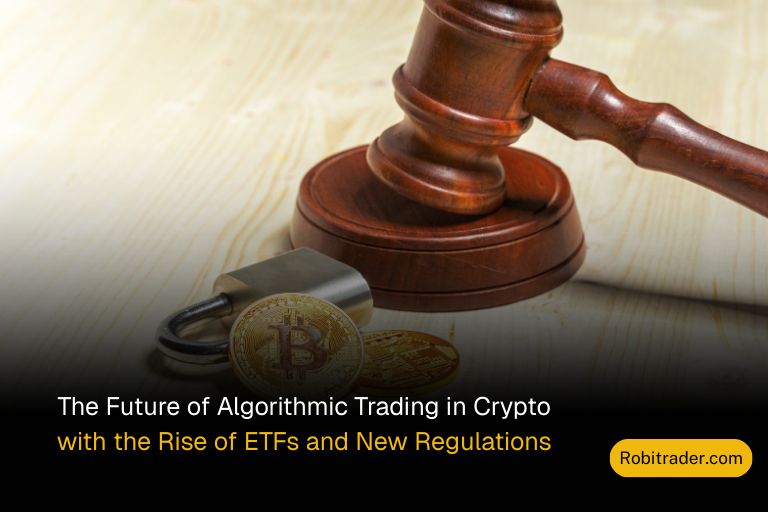
The launch of Bitcoin ETFs marked a turning point for digital assets. By allowing investors to gain exposure to Bitcoin through regulated financial products, ETFs have attracted large-scale institutional capital into crypto markets.
Key Impacts of Bitcoin ETFs
Increased liquidity and deeper order books
Reduced volatility during normal market conditions
Strong correlation between ETF flows and Bitcoin price movements
Greater influence of traditional market trading hours
For algorithmic traders, ETF data such as inflows, outflows, and premium/discount signals has become a critical new input.
The Role of Regulation in Modern Crypto Trading
Clearer regulations have replaced years of uncertainty and "regulation by enforcement." Governments and regulators now focus on compliance, transparency, and investor protection rather than outright restriction.
How New Regulations Affect Algorithmic Trading
Mandatory KYC and AML requirements
Tighter controls on leverage and derivatives
Improved reporting and market surveillance
Clear rules for stablecoins and custodians
While regulation reduces some trading freedom, it also increases trust, stability, and capital inflows, benefiting systematic traders over speculative ones.
New Opportunities for Algorithmic and AI Trading Systems
1. Institutional-Grade Liquidity
ETF-driven demand has improved liquidity across major cryptocurrencies, enabling algorithms to execute larger positions with lower slippage.
2. ETF Flow-Based Strategies
AI models can analyze ETF subscription and redemption data to anticipate market direction—similar to strategies used in traditional equity markets.
3. Cross-Market Arbitrage
Regulated ETFs, futures, and spot markets create new arbitrage opportunities for algorithmic traders operating across venues.
4. Improved Data Quality
Regulated environments provide cleaner, more reliable data—ideal for machine learning models and quantitative strategies.
Limitations and Challenges for AI Trading in a Regulated Market
Reduced Volatility and Alpha Compression
As markets mature, inefficiencies decline. Simple high-frequency or momentum strategies may generate less alpha over time.
Compliance Constraints
Algorithms must now operate within strict regulatory boundaries, limiting leverage, execution methods, and asset selection.
Higher Infrastructure Costs
Professional-grade compliance, reporting, and custody increase operational costs for algorithmic trading firms.
How AI Trading Strategies Must Evolve
To remain competitive, AI and algorithmic trading systems must adapt.
Focus on Advanced Models
Reinforcement learning for dynamic market regimes
Multi-factor models combining ETF flows, on-chain data, and sentiment
Risk-aware AI systems prioritizing drawdown control
Emphasis on Risk Management
Future success will depend less on raw returns and more on risk-adjusted performance, capital preservation, and regulatory resilience.
Institutional vs Retail Algorithmic Trading
Institutional players benefit most from ETFs and regulation due to access to capital, infrastructure, and compliance teams. However, retail traders using cloud-based AI tools and compliant platforms can still compete through niche strategies and agility.
The gap is widening—but not closed.
The Long-Term Future of Algorithmic Trading in Crypto
As crypto integrates further into global finance, algorithmic trading will increasingly resemble traditional quantitative finance—while retaining unique crypto characteristics such as on-chain transparency and 24/7 markets.
Key future trends include:
Greater dominance of AI-driven strategies
Deeper integration between traditional finance and crypto
Increased importance of explainable and auditable AI models
Stronger collaboration between humans and machines
The rise of Bitcoin ETFs and clearer regulatory frameworks has permanently altered the crypto trading landscape. For algorithmic traders, these changes offer improved stability, institutional liquidity, and higher-quality data—while also imposing new constraints.
The future of algorithmic trading in crypto belongs to adaptive, compliant, and intelligent AI systems that can thrive within regulated environments while extracting value from increasingly efficient markets.