
The Future of Financial Markets with Non-Human Traders
How AI-driven trading bots are transforming financial markets, redefining speed, risk, and the future role of human traders.
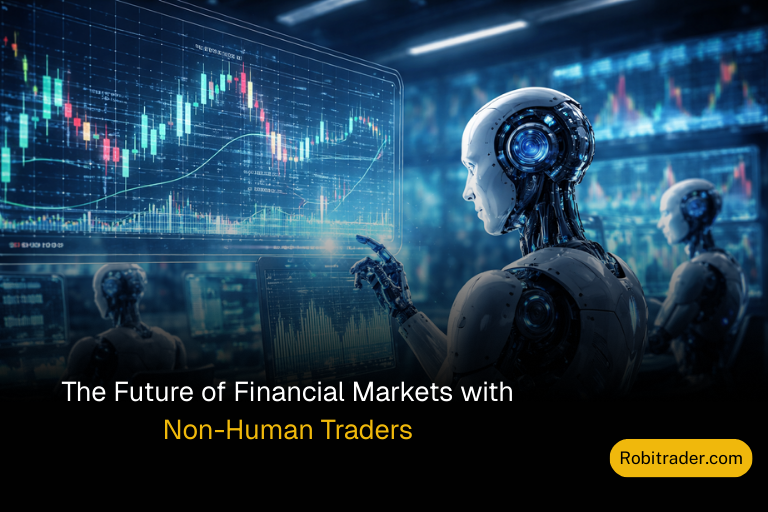
Non-human traders are automated systems that analyze market data and execute trades without human intervention. These systems range from simple rule-based algorithms to highly sophisticated AI models using machine learning and neural networks.
Common types of non-human traders include:
Algorithmic trading systems – Follow predefined rules based on price, volume, or timing
High-frequency trading (HFT) bots – Execute thousands of trades per second to exploit small price inefficiencies
AI-driven trading models – Learn from historical and real-time data to adapt strategies dynamically
Autonomous portfolio managers – Optimize asset allocation using predictive analytics
Together, these systems now account for the majority of trading volume in many major financial markets.
Why Intelligent Trading Bots Are Replacing Humans
1. Speed and Efficiency
Human traders cannot compete with machines that react in microseconds. Intelligent trading bots can:
Process vast datasets instantly
Identify patterns invisible to humans
Execute trades with near-zero latency
In highly competitive markets, speed often determines profitability.
2. Emotion-Free Decision Making
Fear, greed, and cognitive bias have long influenced human trading decisions. Non-human traders operate without emotion, adhering strictly to data and logic. This reduces:
Panic selling during market crashes
Overconfidence during bull markets
Inconsistent decision-making
3. Scalability and Consistency
A single algorithm can manage thousands of assets simultaneously across global markets, something no human trader can achieve. Once deployed, intelligent bots operate continuously with consistent performance.
Impact on Financial Market Structure
Increased Liquidity
Automated trading systems provide constant buy and sell orders, improving market liquidity and tightening bid-ask spreads.
Reduced Transaction Costs
Competition among algorithmic traders has lowered trading costs for institutions and retail investors alike.
Higher Market Complexity
While efficiency has increased, markets have become more complex and interconnected. Feedback loops between algorithms can amplify volatility, as seen in events like flash crashes.
Risks and Challenges of Non-Human Trading
Despite their advantages, non-human traders introduce new risks:
Algorithmic Herd Behavior
When many bots follow similar strategies, markets may experience sudden, synchronized movements, increasing systemic risk.
Lack of Transparency
Advanced AI trading models often function as "black boxes," making it difficult to understand or explain their decisions.
Regulatory and Ethical Concerns
Regulators face challenges in:
Monitoring autonomous trading systems
Assigning responsibility for algorithmic failures
Preventing market manipulation by intelligent bots
The Changing Role of Human Traders
Humans are not disappearing from financial markets—but their roles are evolving. Instead of placing trades, professionals now focus on:
Designing and training trading algorithms
Monitoring system performance and risk
Interpreting market events that machines may misjudge
Setting ethical and regulatory frameworks
The future trader is as much a technologist and strategist as a market participant.
The Future of Financial Markets with AI Traders
As artificial intelligence continues to advance, non-human traders will become more autonomous, adaptive, and influential. Key trends shaping the future include:
Reinforcement learning models that evolve in real time
Cross-market AI systems operating across equities, crypto, forex, and commodities
Human-AI collaboration where machines generate insights and humans provide oversight
Rather than replacing humans entirely, intelligent trading bots are redefining how financial markets function.